Community telling its own story
Posted on September 16, 2007
Filed Under Metepenagiag | Leave a Comment
 The richly decorated embroidery and the more than 13 kilograms of beadwork in the O’Halloran Chiefs Coat is a testament to the 19th century skills of the Mi’kmaq women. The coat appears courtesy of the Canadian Museum of Civilization,
Wayne Kerr would prefer that he and his colleagues, like conservator, Colleen Day, and audiovisual specialist, Peter Gravel, be invisible. “My job is to help the Metepenagiag community tell its own story,” he says. He insists all the focus should be on the community. “The advisory committee has all the say.” he says. “The emphasis is that they were here 3,000 years ago and they are still here in the modern era. Most of the characters on-screen in the videos and all in the multimedia theatre production are local and exhibits speak as “We” to emphasize that it is the Metepenagiag Mi’kmaq community speaking.”
Kerr is the Manager, Interpretation and Client Services for Metepenagiag Heritage Park Incorporated. He is on loan from Parks Canada to the $7.2 million local community and facility tentatively set to open to the public in early August. He is responsible for overseeing the development of all content, exhibits, multimedia components and signage for Metepenagiag Heritage Park. Every element will be in Mi’kmaq, English and French.
A key objective is to encourage this and future generations to learn and preserve the Mi’kmaq language. “This will be the most comprehensive use of Mi’kmaq language in any exhibition in Atlantic Canada,” says Kerr. Metepenagiag Heritage Park makes extensive use of audiovisual presentations to give recognition to the oral history of the Mi’kmaq. In the building’s main exhibit hall, visitors will be greeted by a video welcome. In the theatre, visitors will see a stunning, 20-minute, multimedia production in front, above, below and on both sides of them. Visitors will choose their language, Mi’kmaq, English or French, on their headsets.
An exclusive video in the exhibits shows the modern-day descendants of the mighty sturgeon, the Mi’kmaq battled at night by torchlight in ancient times.
One of the displays is a huge reproduction of the late Mi’kmaq artist Roger Simon’s interpretation of a sturgeon hunt. In front of the Simon piece is a traditional 10-foot, birchbark Mi’kmaq canoe handmade by MHP Heritage Interpreter, Patricia Dunnett. Another shows visitors a helicopter view of the entire Miramichi River basin from the mouth of the bay to Metepenagiag. Another shows the archaeological layers over three millennia. Visitors can use a computer touch-screen to see descriptions, artifacts and photographs of the excavations revealing a particular time period.
In keeping with the oral tradition, Stephen Augustine, a curator at the Canadian Museum of Civilization in Ottawa/Hull, recorded a Mi’kmaq creation story passed down in his family. A highlight of the exhibits will be the O’Halloran Chiefs’ Coat. The exhibit text reads: “The Miramichi and Restigouche chiefs presented this coat to Captain Henry O’Halloran when they made him an honourary chief in 1841. Local Mi’kmaq women’s skills are evident in the richly decorated embroidery and the more than 13 kilograms of beadwork. Captain O’Halloran worked with Moses Perley, Indian Agent for New Brunswick, in preparing a census of the Mi’kmaq and Wolastoqiyik populations.” The final exhibit is a montage of dozens of photos of members of the community from the present and recent past, reminding visitors that the community is still here and moving ahead into the future. “The community wants the exhibits to give perspective, focus and hope” says Kerr.
Metepenagiag Heritage Park NB’s greenest building
Posted on September 16, 2007
Filed Under Metepenagiag | Leave a Comment

All the building’s windows are e-glass which reflects heat back into the building from inside and blocks the greenhouse effect from outside.
There is rigid insulation foam under all floor slabs. Walls are framed with two by six studs. Both walls and ceilings are heavily insulated. Lighting is fluorescent or low energy halogen.
Washroom light fixtures are on motion sensors, turning on and off automatically as do the faucets and low-volume flushes.
Hartop says that current energy prices will have to rise considerably before the extra capital investment in the building could be recovered.
“Capital cost was not the only factor,” he says. “The facility is designed to leave as small an environmental footprint as possible.”
MHP Executive Director, Pam Ward, adds that there was a purposeful approach from the beginning to reduce operating costs as much as possible to ensure the long-term sustainability of the project.
Even so, the project is within its $4,500,000 budget including park and trail facilities, which were not part of the building part of the project budget.
The magic behind it all is the people says chief
Posted on September 16, 2007
Filed Under Metepenagiag | Leave a Comment
 Chief Noah Augustine (Nelson Cloud photo)
A major key to the success of Metepenagiag Heritage Park Inc. (MHPI) is its independence from chief and council says Metepenagiag Chief, Noah Augustine. MHPI was created by an Order of Chief and Council and is mandated to preserve, protect and present the rich Mi’kmaq history and heritage at Metepenagiag. It operates at arms length from the everyday operations and program service delivery of Metepenagiag Mi’kmaq First Nation. One member of the Chief and Council serves on the Board of directors acting as a liaison.
“The park is also a prime example of what can happen with partnerships,” he says. “It’s a crucial step to rejuvenate pride and confidence in the community. I’m really looking forward to see what spin-off opportunities will develop.
“I’m so fortunate to be chief just now after all the work of all the chiefs and so many people got us here. The magic behind it all is in the people.
“It’s very personal for me because Joe Augustine was my grandfather. When we made the movie, “The Village of 30 Centuries. Grandfather baked his last loaf of bread and played the violin for the last time. I was standing behind the camera with Conrad Beaubien, the producer, when Grandfather gazed over the Oxbow National Historic Site for the last time. Every time I see it, I wonder what was in his mind.
“When he was dying, he asked me to put the movie in again. ‘Lot of people going to see that, aren’t they?’ he asked.”
“Now here we are, so deeply in debt to him. His memory and his impact will live on.”
“I’m so very pleased with how Metepenagiag Heritage Park Inc. has handled the complex planning of the park,” he says. “They were very sensitive to community concerns about the design and treatment of an exhibition that deals with a burial site. It is very important that people know we are not digging up burial mounds, that visitors to the park do not have access to the Augustine Mound because it is a sacred site to be protected, and we are not promoting development on a burial site.
“Yes, Grandfather did explore at the mound. That’s how we learned it was a burial mound. There was archaeological exploration in partnership with the province of New Brunswick during the 70s and 80s that scientifically proved that. That was 35 years ago. Today, community archaeology is viewed differently and Metepenagiag is fortunate to have an organization mandated to preserve and protect these types of valuable cultural resources.
“”We also have to realize that, if Grandfather hadn’t done what he did, that whole area would have been bulldozed. I believe it all happened for a reason.
“People should understand, too, that what we learned has led to a revitalization of our culture.
“When I was a kid, we were taught we were savages who had been a hindrance to the development of the country. I heard the jokes. I was taught to be ashamed of myself. That doesn’t lead to the confidence people need to make progress.
“We have a long history here, good and bad. Metepenagiag Heritage Park will help everyone see the bigger picture. I’m really looking forward to the reaction of our people. I’m looking forward to the transformation I expect to see.
“To see our community members smile is always a beautiful thing.”
Uncle’s inspiration, mother’s support lead to Tanya’s dedication to project
Posted on September 16, 2007
Filed Under Metepenagiag | Leave a Comment


Late Chief Mickey Augustine, Tanya Augustine
Her mother Linda’s constant support and belief in education gave Tanya Augustine the confidence to leave Metepenagiag to make her own way in the world.
The death of her uncle, the late Chief Michael “Mickey” Augustine, brought her home.
“I came home when Uncle Mickey died in a car accident on his way home from Halifax,” she says. “It was very important to be with my family. Until then, whenever I visited and left to go back to Fredericton, I felt as though I was going home. After that week, I felt like I was leaving home. It didn’t feel right.”
Tanya had moved to Fredericton in 1995. By 2003, she was an assistant manager at Sweetwaters, a large lounge, bar and nightclub with five bars and two dance floors.
That was her first experience in administration, opening and closing the bars and making sure everything balanced, all inventory was accounted for and staff schedules and wages were properly maintained.
Chief Mickey Augustine died November 24, 2003. Council elections were held at Metepenagiag in June of 2004.
Noah Augustine was elected chief. Jan Morrison, who had held the job as executive administrative executive assistant with Metepenagiag Heritage Park Executive Director, Pam Ward, transferred to the Chief’s office.
After a competitive interview process, Tanya became Pam’s new executive administrative assistant just as the Metepenagiag Heritage Park project was set to go ahead. Metepenagiag Heritage Park Inc. and its funding agencies set up jointly approved administration systems for the construction phase of Metepenagiag Heritage Park .
To prepare to operate the financial controls required, Tanya took an eight-week accounting software course at the New Brunswick Community College Miramichi campus. Since then, she says, she has learned a lot from the park’s chartered accounting firm. In addition to the annual audit, periodic mini-audits are conducted by various funding agencies.
A management committee meets monthly to review construction progress as well as contracts issued.
Augustine issues purchase orders and prepares payment claims for each of the three elements of the project. Each order and invoice is signed off by the managers, the executive director and the board of directors.
“The funding partners have been good,” says Augustine. “They make the reimbursement payments within about 30 days. No one can say we didn’t do it right.”
The managers make progress payments to the subcontractors regularly. That means Tanya’s work has to be done promptly and correctly to ensure adequate cash flow for the project.
Life for Tanya has been hectic since the start of construction a year ago. She has already processed payments in excess of $5,000,000. As the construction phase winds down, she is working on the grand opening and beginning to prepare for the operations phase.
That includes training programs and payroll for the 20 employees the park will have by next summer. She is also setting up the accounting systems for admission fees, facility rentals and boutique revenues. The park’s annual operating budget is expected to be in excess of $400,000.
Tanya operates mostly behind the scenes at Metepenagiag Heritage Park but her enthusiasm, dedication and her incandescent smile flash on whenever the need arises for help with a tour or hospitality for a visiting group.
MHP Executive Director, Pam Ward, also values Tanya’s ability to share her administrative and project management experience in future, large, community-driven, cultural and tourism projects.
Tanya has settled into the community for the long haul. She has bought a home and lives with, in her words, “the most wonderful guy ever,” Patrick “Paddy Joe” Ward.
“I think this is our biggest opportunity for local employment. There are many spin off business opportunities as well as the direct jobs,” she says. “People here are looking for an opportunity to be self-reliant. Also as a member of the community, I think it is important for our people and people everywhere, to be able to see the record of our time here.”
Wilfred Ward knows the old stories and ways
Posted on September 16, 2007
Filed Under Metepenagiag | Leave a Comment

Wilfred Ward
Wilfred Ward is a Metepenagiag Heritage Park Inc. board member, community Elder, and one of the three original members of the committee set up to decide what to do with artifacts recovered from the archaeological explorations. The others are Joe Mike Augustine’s daughter, Madeline Ward, President and Chair of The Board of Metepenagiag Heritage Park Inc. and Pam Ward, MHP Executive Director.
“At first, people didn’t think we’d ever get anywhere!’ he says with a smile.
He was a friend of Joe Mike Augustine’s and son of the late Chief Frank Ward. Frank Ward Day has been an annual holiday in the community for years. Wilfred says his father worked on the survey that set out the boundaries of the community. He made sure the community’s copy of the survey stayed in council’s hands. When an Indian Agent borrowed it, he made sure they got it back. Without that, it would have been difficult for the community to prove its outstanding land claims.
“The survey showed we had 20,000 acres,” he said. “Over the years that got pushed down to 12,000.”
As of this year, with the community opening of Metepenagiag Heritage Park, the holiday becomes Metepenagiag Day.
Wilfred’s daughter, Francine, is an artist currently living in British Columbia where her husband, Dana Francis, is a homebuilder. Various pieces of Francine’s artwork are showcased throughout the Exhibit Hall of the park.
She is also the artist who designed the Metepenagiag Heritage Park logo, a stylized fiddlehead design depicting the two National Historic Sites at Metepenagiag.
She has also recorded all her father’s stories, many of which he heard from Joe Mike Augustine.
Wilfred says Joe Mike Augustine was a very laid-back, generous man who knew all the old ways and would share them with anyone who was interested.
He worked as a cook on river log drives. “Whenever you went to see him, he was always baking bread,” Wilfred laughs. “I guess, cooking for a hundred men, you learn quick to be a good cook on those log drives.”
“He cut pulp. He was an awful good trapper. He got mostly beaver, mink and muskrat. He sent beaver pelts to England where they were made into hats for the guards at Buckingham Palace.
“He made baskets and even axe handles and peavey stocks.”
Wilfred says Madeline Augustine, President and board chair of Metepenagiag Heritage Park Inc., is just like her father.
“We just love her,’ he says.
The sturgeon were gone by Wilfred’s time. His father told him the Mi’kmaq would put a huge scoop net in a hole through the ice as the tide came in. Then they’d walk in wide circles outside the net and sturgeon would crowd into the net.
“The net would be full of them, about three to four feet long,” he says. “The sturgeon is awful tough to kill, you know. It can live out of the water for quite a long time.”
Wilfred describes how Mi’kmaq hunted deer and moose in teams in winter. He says the deer would yard in lowland areas and made trails to higher ground where they would go to feed during the day.
The hunters would hide behind trees along the trail, downwind of the deer. Other hunters, upwind, would chase the deer down the trails. The hunters in ambush would step out and club the deer with a piece of wood the size of a baseball bat.
“The fellow who killed the deer never got much of the meat. Everybody in the community got a share,” he says.
They used Newfoundland dogs as working animals. “When they killed a moose, they’d load it onto a sled and the dogs would haul it home.”
“In those days,” he says, “everyone had a big garden. There were no vegetables in the stores, just flour, sugar, tea, staples like that.” He says Joe’s father had a huge garden, barn and livestock.
Ward says that he has been concerned that, as the old ways disappeared, the young didn’t have the same work.
“Many of them,” he says got much more education but didn’t have the confidence or motivation to get out and find a job.
“Metepenagiag Heritage Park is a major stepping stone,” he says. “We have everything here to show who we are and where we have been. It will help make our young proud and confident.”
Wilfred Ward sees Metepenagiag Heritage Park contributing to various economic benefits to the community and the region.
“For one thing,” he says, “Government should improve the road from Miramichi out past Metepenagiag to McGraw Brook on the Renous to Plaster Rock highway. That would improve access from Maine, Quebec and Ontario to Metepenagiag but also to and from the entire area.”
Overwhelmed with respect for enduring people – Patricia Allen
Posted on September 16, 2007
Filed Under Metepenagiag | Leave a Comment

Oxbow Crew from either 1978 or 1979.
Back row, left to right: Gilbert Matchett, Scott Finley, Howard Augustine, Patrick Levi, Edward Levi;
Center row: Carmella Levi, Adele Emin, Rhonda Dunnett, Glenda McAllister, Madeline Augustine,Pat Allen;
Front Row: Toni Paul, Tommy Haddad, Mary Louise Cloud, Albert Ferguson.
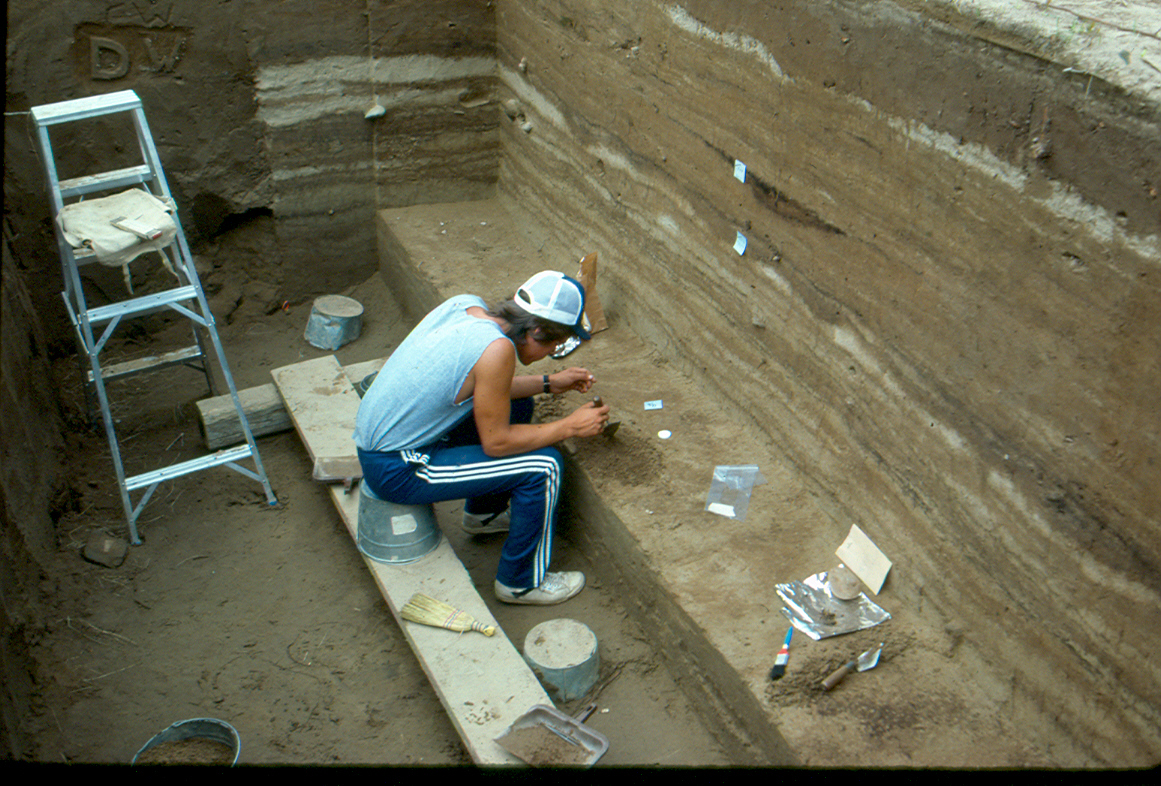 Delbert Ward, as a student, worked on the Oxbow excavation. At the official opening of Metepenagiag Heritage Park, he was a member of Metepenagiag band council
“Metepenagiag lucked out having the same lands assigned to them that were their natural history,” says Patricia Allen, one of the two Province of New Brunswick archaeologists who worked extensively with the community. “That was quite uncommon.”
She says there are dozens of sites in the Metepenagiag region while most Mi’kmaq communities on the coast have disappeared as coast lines erode and move.
About Metepenagiag Heritage Park, about to open this month, Allen says, “This is Joe’s dream. He wanted his people to know and everyone to benefit.”
Chris Turnbull was the first archaeologist hired by the province. Allen was his student for an archaeology course at the University of New Brunswick. She worked for him as a summer student field assistant at Metepenagiag. She eventually became the second employee of the department.
Turnbull was the lead archaeologist at the Augustine Mound. Allen led the Oxbow exploration.
Allen says she was very privileged to be able to work with wonderful people in the community. She says Joe Mike Augustine, who started it all, was “an incredible gentleman,” a wise and very funny man who delighted in teasing her and students on the digs.
She says Madeline Augustine had the same regal serenity about her at 25 as she does now.
“Working six days a week in the community, I didn’t often leave for my one day off,” she says. “One night I was at a ball game with Madeline. A group of boys was getting rowdy to the point they were interfering with the game. Madeline just leaned over and looked at them without saying a word. They immediately quieted down and just walked away.”
Allen says she and Turnbull were also privileged to be in at the beginning of provincial involvement in archaeology.
“There was no history so we were able to go out into the field and get involved,” she says. “Our deputy minister, Dr. George MacBeath, was a historian and very supportive. He would bring cabinet ministers out to the sites. The ministers seemed to be gratified that their department was involved in such unique projects.”
Now retired, Allen was 21 years old when she began to lead teams at Metepenagiag. She spent about 8 to 10 years of her career primarily at Metepenagiag.
She remembers the day when the connection between the archaeological facts and the present day people of the community overwhelmed her.
It was a very hot day in 1975. Madeline Augustine, Howard Augustine and Yvonne Ward were three of the team of eight working on a dig on private property.
“The owner was very nice,” she says. “He gave us permission to dig and did not ask that we turn over artifacts we found as was his legal right. His daughter was part of the team. Still, I was struck by the irony that this was their history we were digging up but we had to ask permission.
“I watched Madeline, Howard and Yvonne down sifting in the dirt and was suddenly overwhelmed with respect for these enduring people!”
Allen emphasizes that archaeology is fact based. “We find more sturgeon bones than salmon bones,” she says, “but that is probably because sturgeon bones are more durable and last longer.”
She says the research reveals various changes and influences to and from other areas at different times over the millennia. Types of projectile points change and there are population fluctuations. She says she cannot estimate a peak population in the region but there were peaks and valleys.
“Something happened just about the time of the first European contact,” she says. “We don’t know what it was but there was sudden decrease in the activity at Oxbow.”
About 2,000 years ago a type of spearhead also common to the southern Atlantic seaboard turned up here. About 3,000 years ago there was pottery at Metepenagiag that was also found in the Great Lakes region.
The idea that community involvement and public awareness can be beneficial, not only to the discipline of archaeology, but also to the public is a relatively new one to archaeologists. Patricia Allen is pleased to be able to say that, thanks to the people of Metepenagiag, it isn’t new to her or Chris Turnbull. She says the entire Metepenagiag experience has enriched her personal life and guided her professional development.
Archeologist calls Metepenagiag Heritage Park a model for First Nations relations
Posted on September 16, 2007
Filed Under Metepenagiag | Leave a Comment
 Dr. Chris Turnbull
After Metepenagiag Chief Donald Ward had known Dr. Chris Turnbull for about three years, he told him “I have decided to trust you.”
Turnbull, the very first archaeologist hired by the Province of New Brunswick, had met Joe Mike Augustine in September 1972. Paul Morrissy, Director of Native Studies at St. Thomas University which had taken the lead in trying to attract First Nations students.
Having seen Joe Mike’s box of artifacts, spear points, knives, copper beads and a pipe, he and two students went to Red Bank to visit the site.
Then began the process of earning the trust of the community and an agreement on how exploration could proceed. Because Joe Mike made his discoveries on band land, chief and council could and did immediately stop the removal of gravel from the pit near the mound.
First Nations had very little interaction with provincial governments then. First Nations members were under federal jurisdiction. Neither they nor governments favoured doing anything that might diminish the federal role.
Historic resources, however, are a provincial responsibility. Turnbull raised funds from grant programs outside provincial government sources. His department was content to let him work directly with the First Nations on lands both levels of government considered federal.
Dr. Turnbull considered Chief Donald Ward’s trust an honour and a tremendous responsibility.
As in the Chinese curse, Turnbull believes the decades since the early 70’s have been “interesting times.”
“Europeans had to learn to listen to First Nations people, consult them and work with them to establish consensus on their affairs. The system was horribly broken.”
There is a tone of irritation verging on contempt in Turnbull’s voice as he describes how a “bunch of transplanted Europeans” were making decisions about First Nations affairs, land and culture.
There was a lengthy period in the late 80’s and the 90’s when nothing much could be done because government policies were opposite to First Nations policies. Parks Canada was willing to build and operate a centre but insisted on owning the land and running the facility. The national museum was willing to sponsor exploration but insisted on taking possession of any artifacts recovered.
At the same time, First Nations were working out their own consensus on the treatment of burial grounds and archaeological sites.
Turnbull praises Metepenagiag leadership and participation throughout the exercise that has led to the community owned and operated Metepenagiag Heritage Park. He said it is crucial that the community has the authority, responsibility and accountability for all the decision making.
He says the process that has made Metepenagiag Heritage Park possible should be a model for all government dealing with First Nations.
Joe Mike Augustine was instrumental in the discovery of both the Augustine burial mound and the Oxbow community sites.
Chief Donald Ward was instrumental in establishing an agreement to allow and provide for the respectful treatment of the sites. There will be no exploration of burial sites and the public will not visit either the Augustine Mound or the Oxbow community exploration site.
Turnbull says Joe Mike embodied Mi’kmaq traditions in how he lived his life.
“He didn’t lecture. He set the example.
“His spirit is embodied in Madeline. She is the constant influence from the beginning.”
He says Chief Noah Augustine is the man who pulled the community together and “worked his magic” to establish consensus. “When he was able to pull together the making of the film “The Village of 30 Centuries,” that brought the project to life,” he says.
“Next in the continuum of great leadership is Pam Ward who has brought the park into existence,” he says. “Patricia Dunnett has to be on that list too,” he says. “She is carrying a great deal of the weight to interpret the Mi’kmaq culture as the centre develops.”
Turnbull says Northumberland Miramichi Member of Parliament, Charles Hubbard was a constant supporter of the project “bugging the hell out of Parks Canada.”
Oxbow dig student worker heads Metepenagiag Heritage Park
Posted on September 13, 2007
Filed Under Metepenagiag | Leave a Comment
Metepenagiag Heritage Park – ©Nelson Cloud
In the summer of 1984, powerful emotions washed over a raven-haired young Mi’kmaq woman as she stared at a few bones in her hand. She realized, for the first time, her connection to ancient traditions and culture and ancestors who had lived on the same spot for 3000 years.
She was working as a summer student on the last of a series of exploratory digs in her community near Red Bank, known to the Mi’kmaq as Metepenagiag. An archeologist had just explained to her that the bones she had found were sturgeon, a staple fish of the villagers’ diet in ancient times.
Her ancestors went out onto the water at night with torches and spears. The sturgeon would be attracted to the light and speared. Male sturgeon grow up to six feet in length and 100 lbs. Females can reach 15 feet long and weigh as much as 800 lbs. They have armour plate rather than scales.
( http://www.dnr.sc.gov/cwcs/pdf/Sturgeon.pdf )
The bones she had found came from one such nighttime hunt. Imagine the battles that took place on those torch-lit nights.
“I held those bones in my hand and realized I was part of something ancient to be proud of,” she says.
Band member, Joe Augustine, had triggered the archeological interest. In 1972, he saw pictures in a magazine article that led him to believe the local mounds he had wondered about for years were ancient burial sites.
In 1992, the same young woman who had worked on the dig, now a very young band councilor, was one of the members to sign off on the decision to do a feasibility study for a heritage park project.
On August 22 of this year, that same woman, Pam Ward, now Executive Director of Metepenagiag Heritage Park Incorporated, welcomed the first tourists to a spectacular, hi-tech, $7.2 million dollar centre dedicated to the preservation, protection and presentation of the community’s heritage.
Metepanagiag is the home of not one but two National Historic Sites. One is the Augustine Mounds. The other is Oxbow, the “Village of 30 Centuries.” The current residents and their ancestors have lived in Oxbow continuously for at least 3,000 years.
The park is be open from 9 a.m. to 6 p.m., seven days a week and holidays.
For visitors, a highlight is a 20-minute video presentation surrounding the audience and on the floor. It tells a story of a homecoming from a trading mission to the Ohio and a budding romance.
There are also trail walks, replicas, and the opportunity to observe continuing research.
“We are hoping visits will average two hours,” says Ward.
The Park facilities are also available for meetings and conferences.
In addition to the interest from visitors from far and wide, Ward says she hopes Metepanagiag Heritage Park will help young Mi’kmaq develop a healthy pride in their people and past.
“You need to know where you come from to know where you’re going,” she says.
Vehicles we met in Italy
Posted on September 11, 2007
Filed Under Travel | Leave a Comment
Here are some of the very different vehicles we saw in Italy.
Some are just tiny.


Others, like this UPS vehicle, above, suit the delivery of packages to retailers in the narrow streets and alleys of Capri.

Sanitation workers haul tiny dumpsters out of narrow alleys. These small dump trucks, on narrow streets, dump the dumpsters into their dumps. Then, the small dump trucks go to what we would call a normal size dump truck, on a normal, or even wider than our normal, street and dump their loads into that. The small dump truck, incidentally, is battery powered.
Cats we met in Italy
Posted on September 11, 2007
Filed Under Travel | Leave a Comment
Click on the pics to enlarge them. Click again to enlarge again.


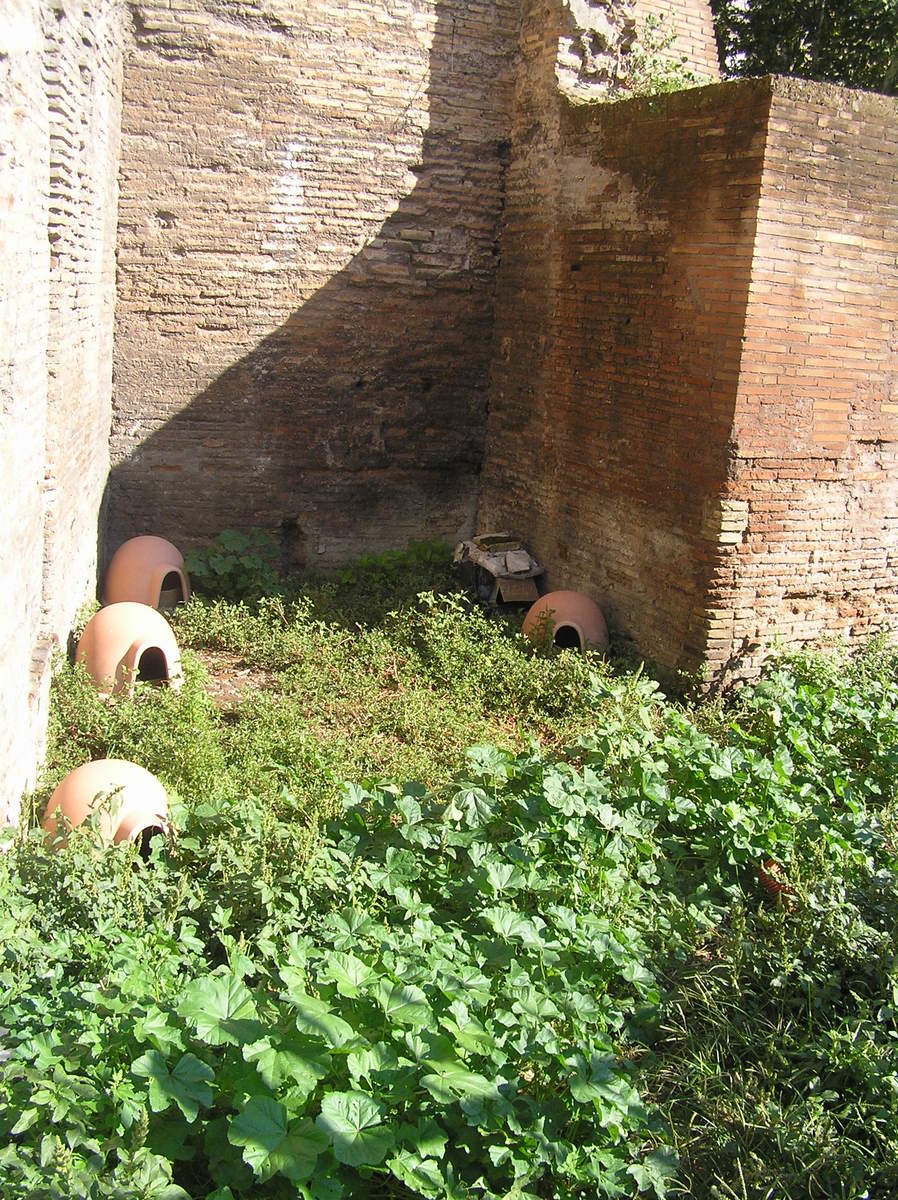

Here are a few cats we met in Italy.
The little black guy on my chest came to our villa in Umbria and convinced us he was homeless and starving. Two days later a very distraught Italian lady came by crying for her “catina negra.” There was a joyful reunion. Next morning, he was back with the same story.
The big gray guy on the wall, was among those of us in Via Reggio who went down to the channel into the harbour at lunch time. The boats come in and clean and sell their catches right there. Another vessel sells the very best deep fried seafood we’ve ever had right off the boat.
In Rome, women provide baked clay houses for stray cats. They put them in the church yards and come to feed the cats every day. The big orange Tom cat gives you an idea of what life is like for one of these strays. On second thought, he is probably neutred. Tom’s usually have battle scars.